In the summer of 1958 I was five years old and my long-suffering sister Chris was 16. My parents decided this would be a good time for a road trip to Wisconsin. We didn’t often travel with my parents; they lacked the required patience for keeping kids occupied on hours-long trips. My mother tried her best, but she would get through about one round of license plate bingo and she’d groan ‘that’s enough for now.’ I entertained myself by harassing Chris. I’d squirm and kick, whine and pester until she lost it. Then my parents would lose it. My father was straightforward when he was mad–he bellowed. My mother, on the other hand bordered on sinister. She would fix you with a glare that made you believe you’d self-immolate into a blob of cinders. We repeated this cycle the whole long way. I don’t remember much about being in Wisconsin, but I sure do remember that car ride to Wisconsin.
Sixty-six years later I found myself thinking about that trip as we headed to Egg Harbor in Wisconsin’s Door County. There’s no longer any need to entertain myself by making someone else miserable. At least Ben hasn’t bellowed at me–yet. I was anxious to see what I had missed all those years ago.
Door County is in the little “thumb” of Wisconsin that separates Green Bay from Lake Michigan. The peninsula is dotted with communities that have charming names; Sturgeon Bay, Fish Creek, Sister Bay, Bailey’s Harbor, Ellison Bay and so on. We stayed in the equally charming community of Egg Harbor. Door County is a land of festivals, wineries, apple orchards, galleries, T-shirt/doodad stores and cheese shops.
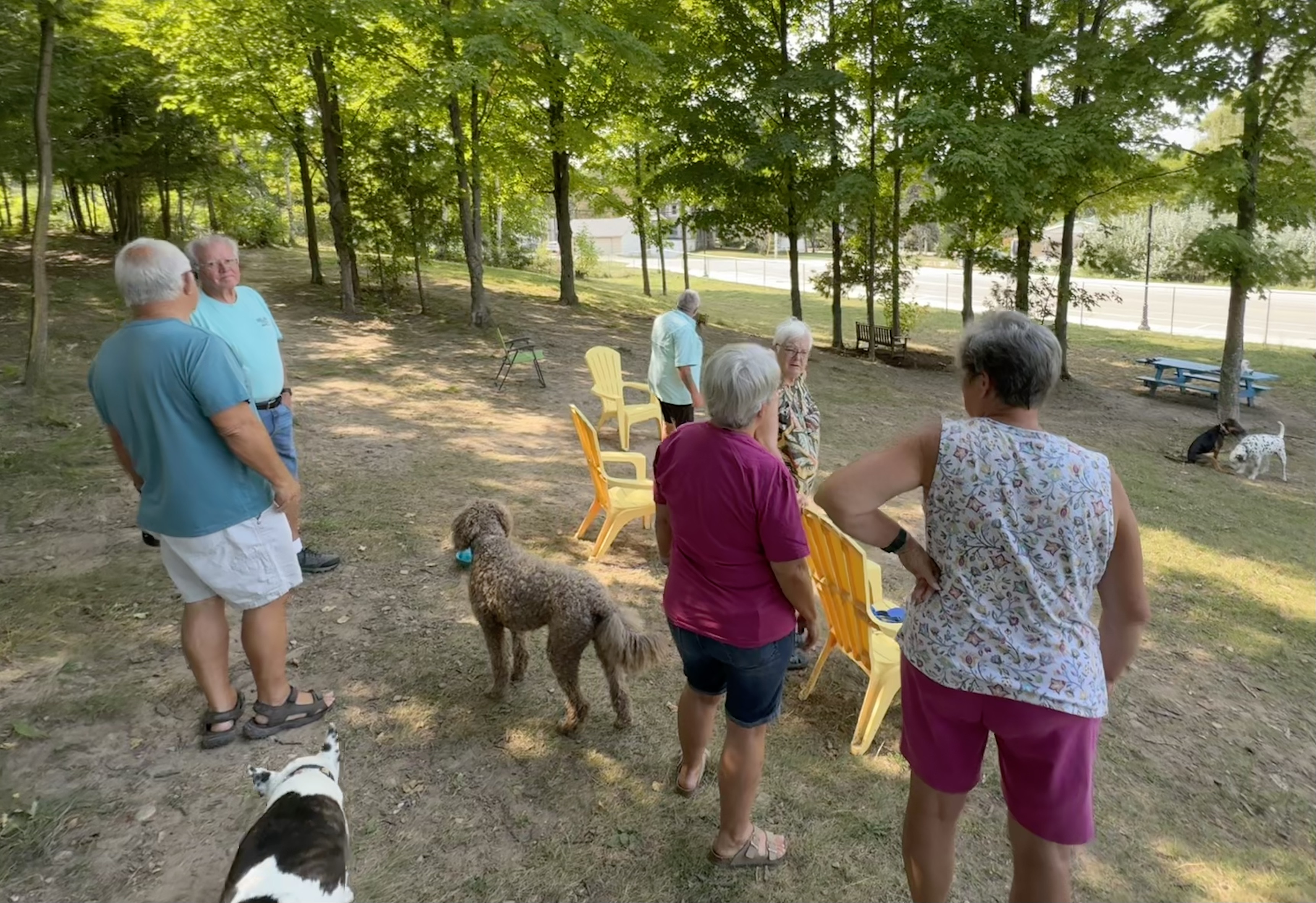
We camped with a group of friends we’ve met over years of travel. We have dogs and RVs in common. Our days settled into a routine pretty quickly; go to the dog park at 11 am, lunch at noon, out and about to one of the little communities nearby for sightseeing and a nightly campfire. Our friends Kathy and Chuck are Door County veterans and they planned a special outing for us that is a must-do in the peninsula; a fish boil.
Door County’s prime form of show-stopping entertainment is the fish boil. It shares a similarity with other mass forms of cooking such as the clam bake, crawfish boil, and New England boiled dinner in that they are methods for feeding a huge crowd all at once. These meals all have their roots in feeding work crews; humble, common ingredients that can be cooked together quickly. I read that Scandinavians brought the fish boil to Wisconsin, cooking up vats of fish and starchy food to feed lumberjacks and fishermen.
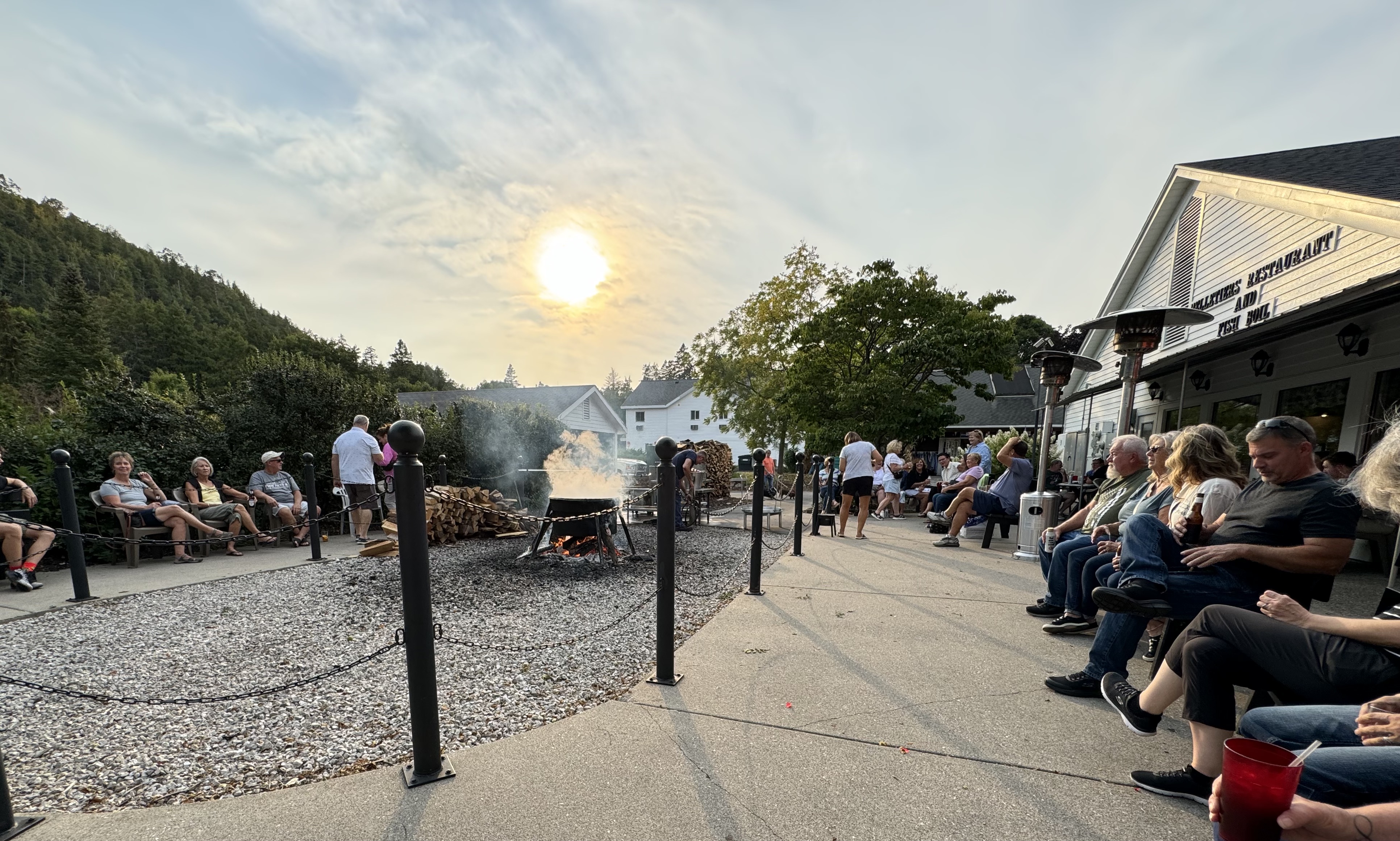
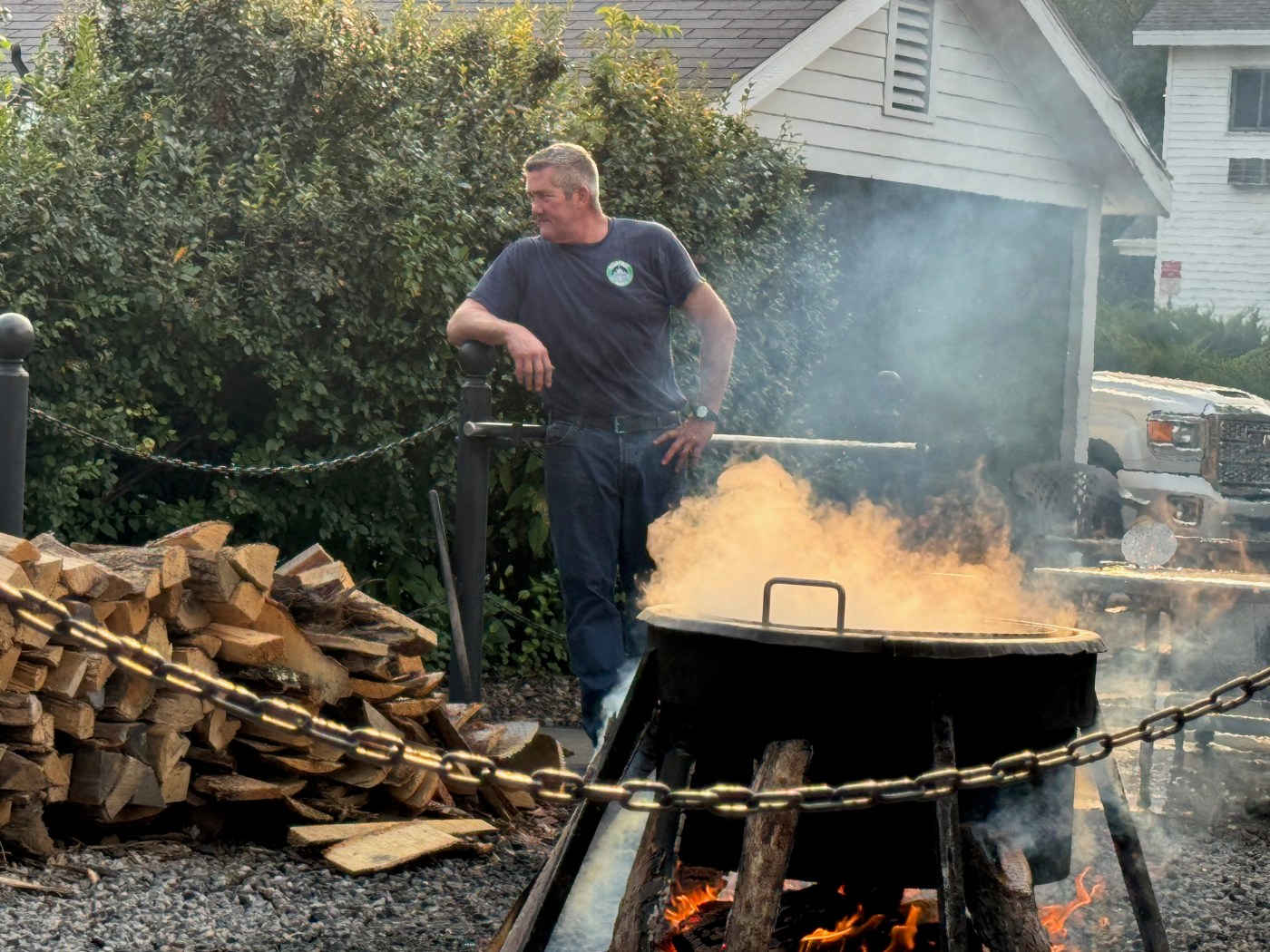
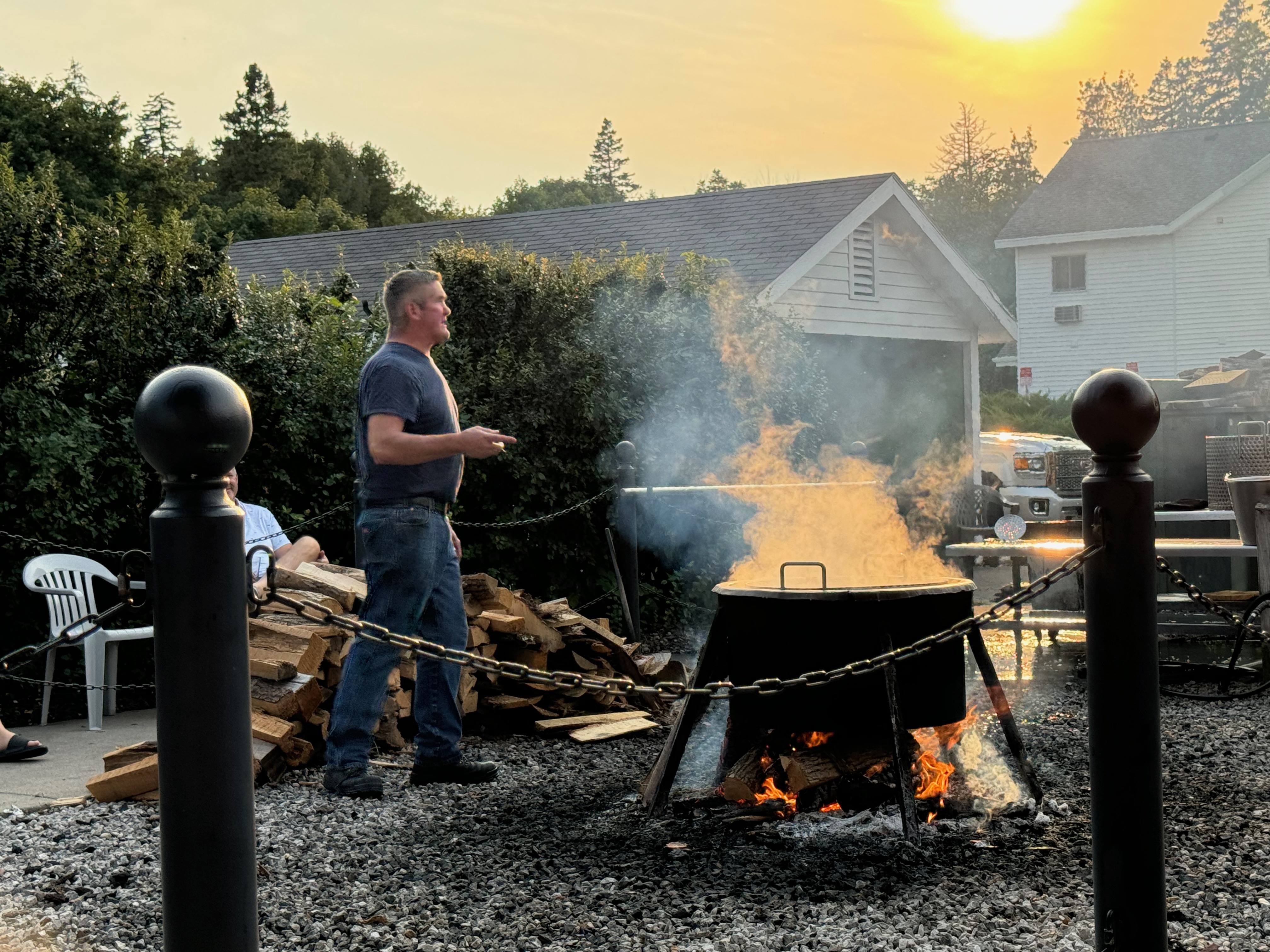
We chose Pelletier’s Restaurant & Fish Boil, located in Fish Creek. We bought our tickets and showed up at the designated hour. It was a cool night with a touch of autumn in the air. We were ushered through the restaurant to an outdoor arena where we waited and watched the big fire where a giant cauldron roiled with steam. Once the viewing area was filled with people, a man who looked like what you’d expect in a strapping Scandinavian guy strode out and began his talk about the history and process of the fish boil. Since I can’t remember his name, let’s agree to call him Benson. The first thing Benson did was to add an enormous bucket of salt to the boiling water with a great flourish. The ratio is 1 cup of salt to every 2 gallons of water. The crowd gasped, followed by nervous laughter. We and most of our fellow diners appeared to be well into our golden years so there were lots of jokes made about swollen feet and needing to take a booster dose of blood pressure medicine. We waited for Benson’s next move. Helpers brought out a huge wire basket filled with potatoes which Benson lowered into the cauldron. After a few minutes, the helpers produced an equally huge basket of whitefish. Before they were dunked in the cauldron, Benson invited the crowd to take a look at the mass of fish carcasses. The head and tail are removed and the fish are gutted, so I decided against lining up with the others to get a photo of fish bodies. You readers will have to use your imagination. The bones are left in the fish because without the bones the delicate flesh wouId disintegrate in the boiling process. The fish were lowered into the cauldron, followed a few minutes later by a basket of corn on the cob. Benson explained that whitefish are oily, and boiling removes the oil, making the fish more palatable as well as producing oil that floats on the water. Here’s where the fish boil took a Benihana kind of a turn. To finish everything off, Benson dumped a can of kerosene on the flames, which shot beyond the roof of the building. The increased heat caused the cauldron to boil over. Remember the fish oil? It adds its own smoky kind of fire drama. Everyone oooohed and aaaaahed, the fire went out and we were shooed into the dining room to our assigned tables.
Our fish arrived basking in a puddle of butter and the corn and potatoes happily bobbed in their own buttery pool on the plate. Whitefish is like trout in that the skin can be eaten. It’s also like trout in that it’s easy to de-bone when cooked. Unlike fancier fish with thread-fine bones your grandma warned you not to swallow, whitefish bones are robust and prehistoric in size. Here’s where we ran into a snag. Ben is not a fan of fish in general, and fish bones in particular, so he was unnerved by the bone situation. It doesn’t take skill to de-bone a hunk of whitefish, bravery is the only requirement. Fearlessly grab the protruding backbone and give it a yank. He was dubious, but game to try. I was so proud of him; after a quick demo, he managed to get the bones out and he got a round of applause. We commenced to eating.
The dining room quieted down some when we got our dinners. Slabs of pie were served for dessert. We laughed about the fish and Benson’s performance, made more stupid jokes about fish bones, swollen feet and cholesterol. The humble meal was satisfying in a church supper kind of way; warm, salty, buttery and filling. Full of food and slightly greasy, we piled into our cars and headed back to our campground.
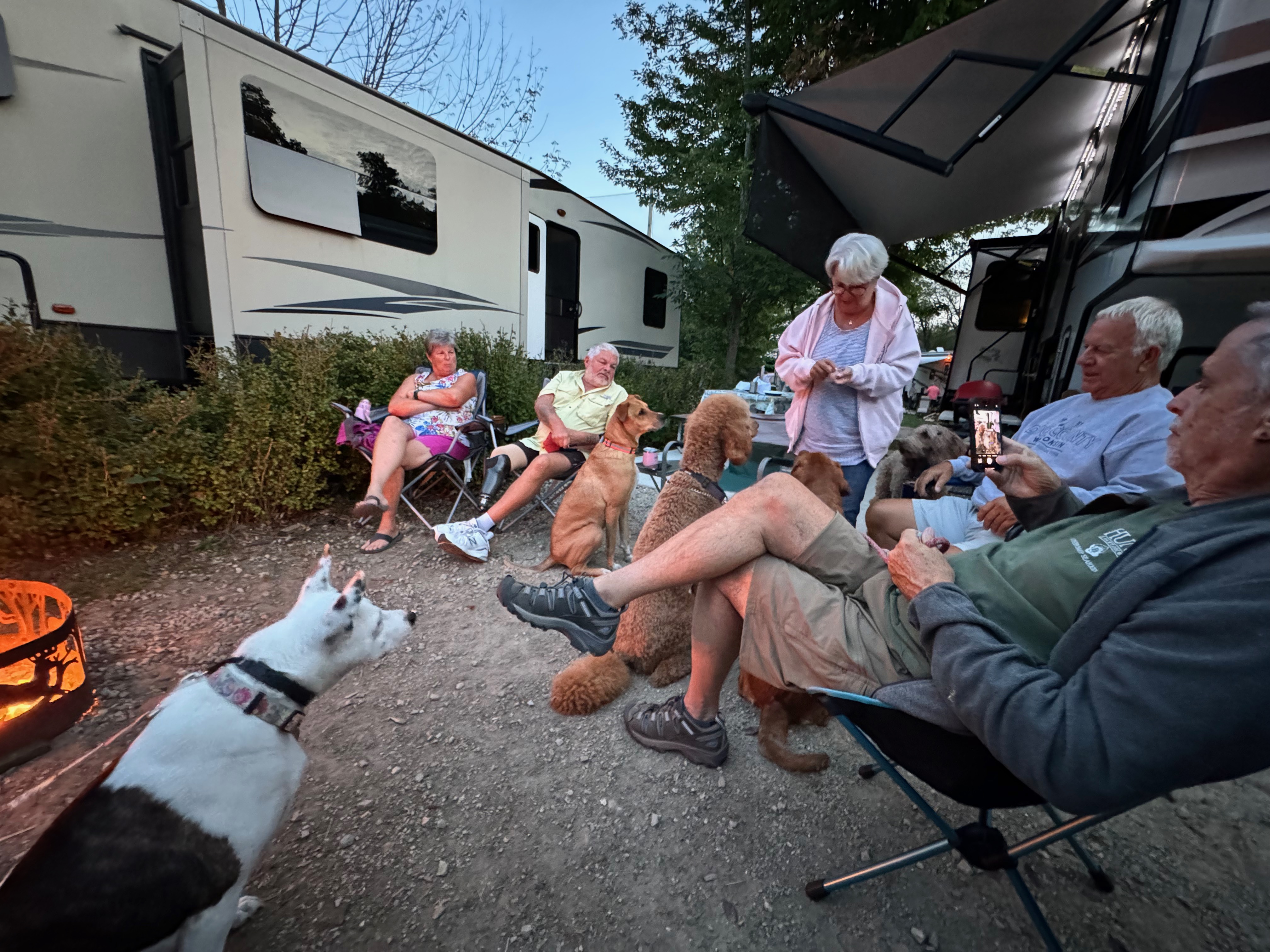
At the evening campfire surrounded by our friends and their dogs, I thought about our experience. Long ago, meals like that were how people connected and cared for each other at a shared table. You don’t dine at these kinds of meals, you break bread, get messy, forego table manners and social status. A fish boil is a communal activity, meant to be eaten by families and groups of friends at long tables. We could do with more of that these days.
Here’s a slide show of the fish boil drama. Enjoy!
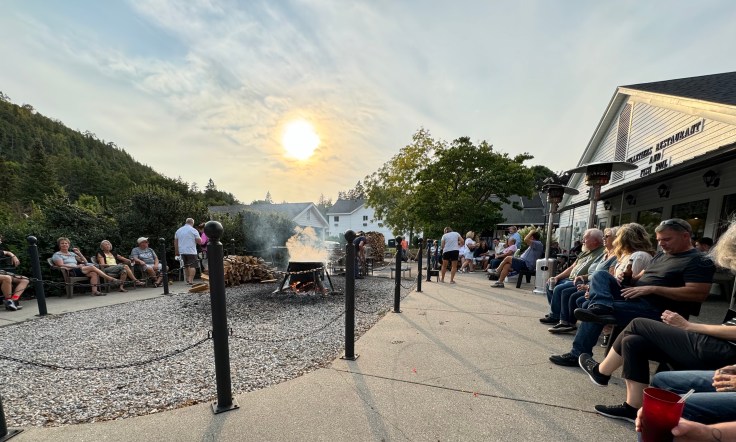
Waiting for the big show to begin! 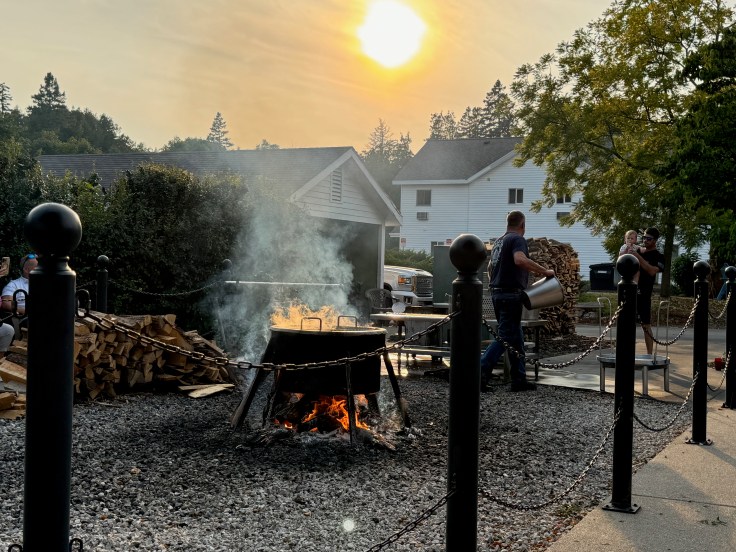
The cauldron 
“Benson” explains the history of the fish boil 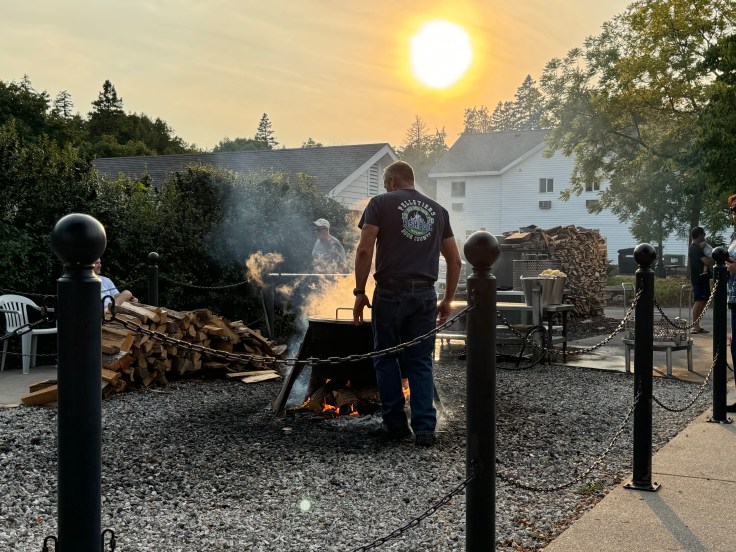
Checking the kettle 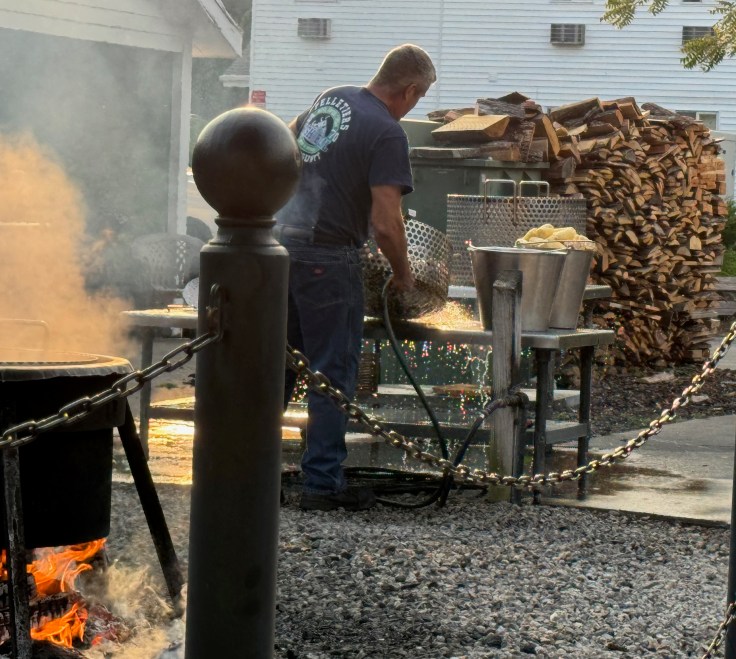
Prep work 
Lowering the fish 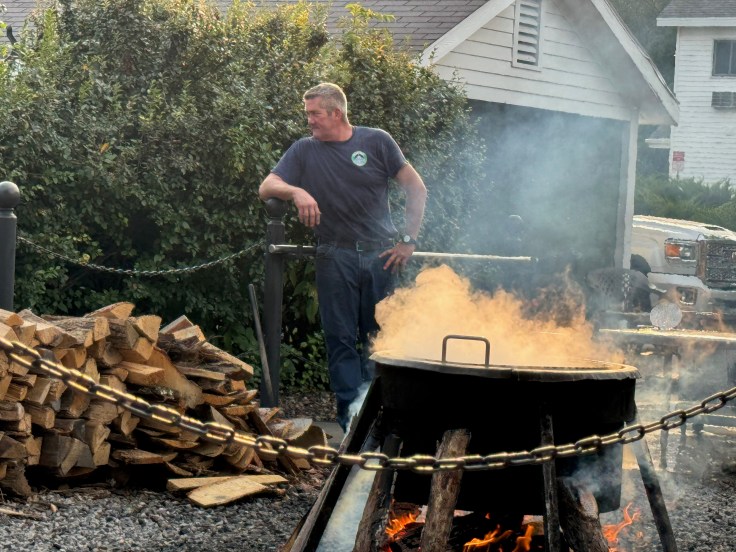
Scandinavian nonchalance 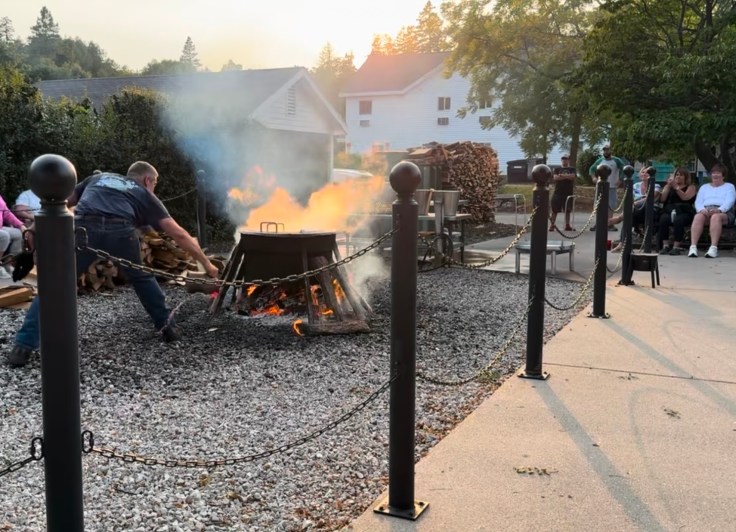
Application of kerosene 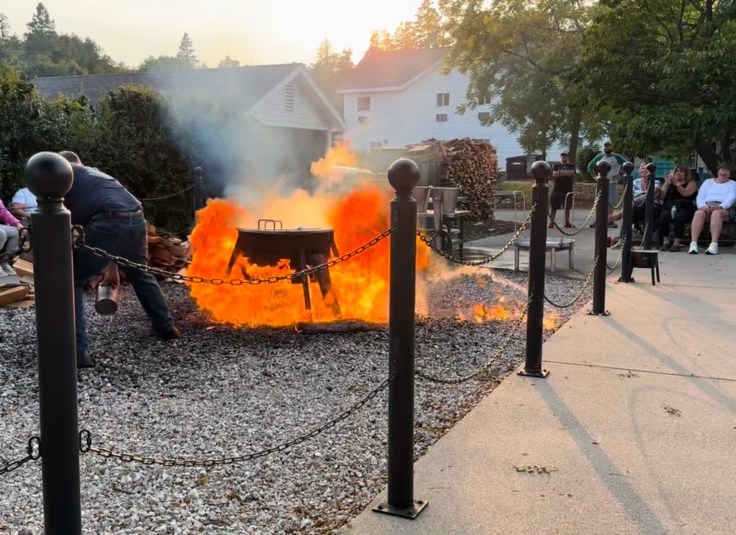
Jumping back. Wonder if he has any arm hair left? 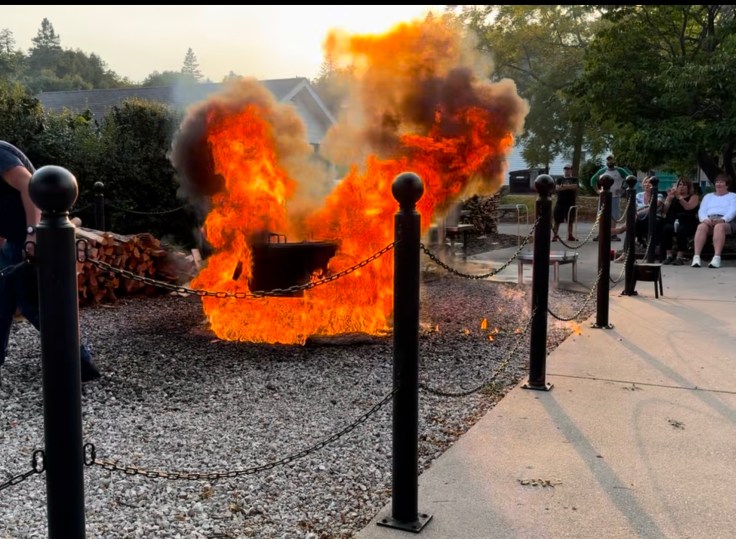
Flaming 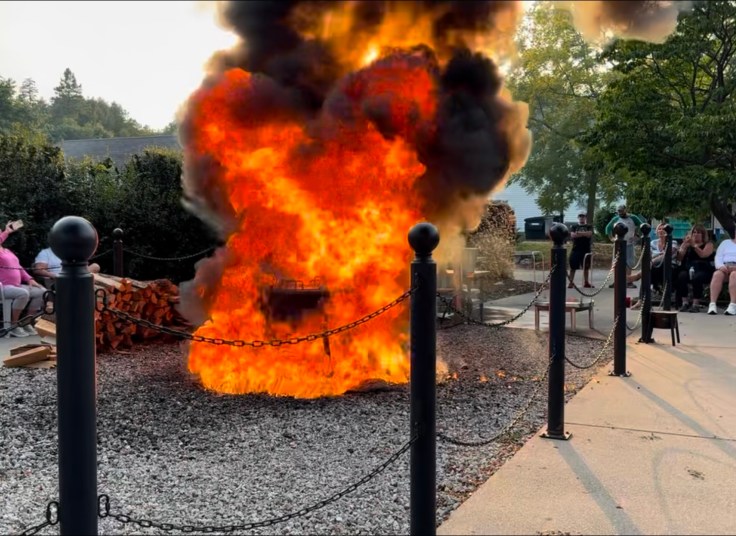
Flaming even more 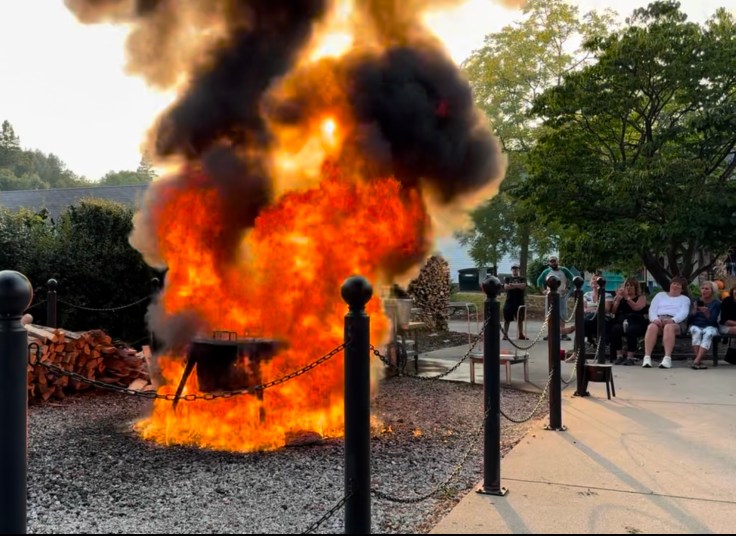
Super duper flaming 
Boil over! 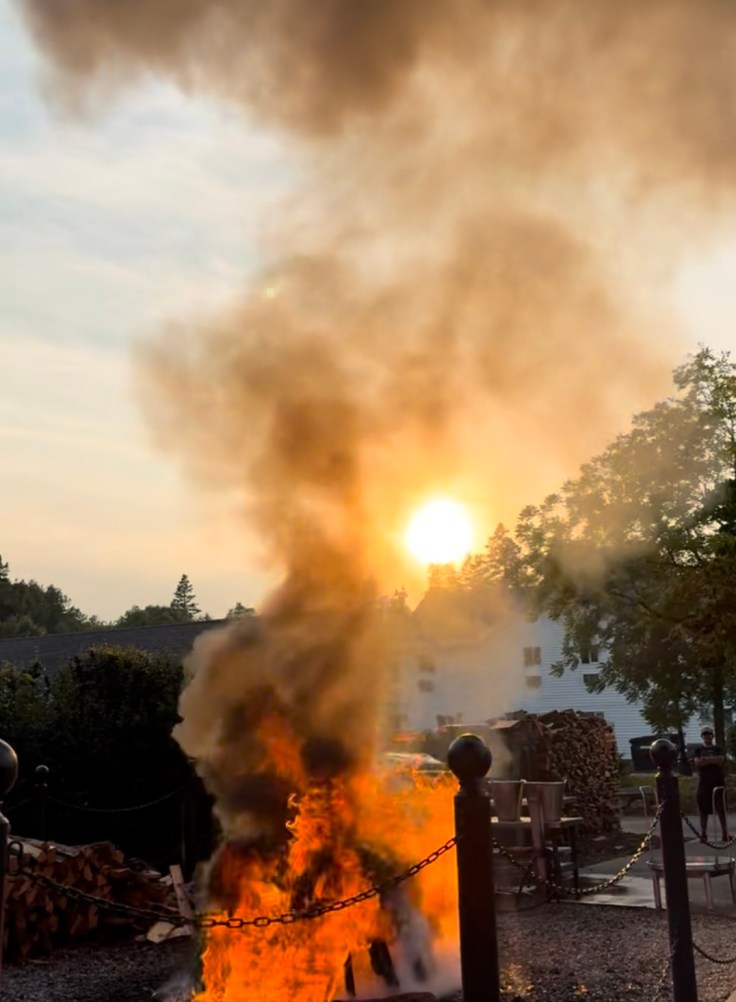
Pillar of smoke 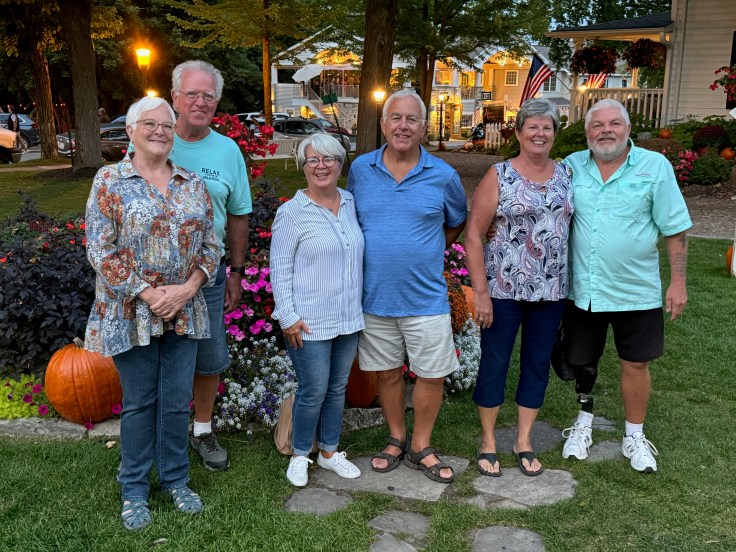
Precious friends 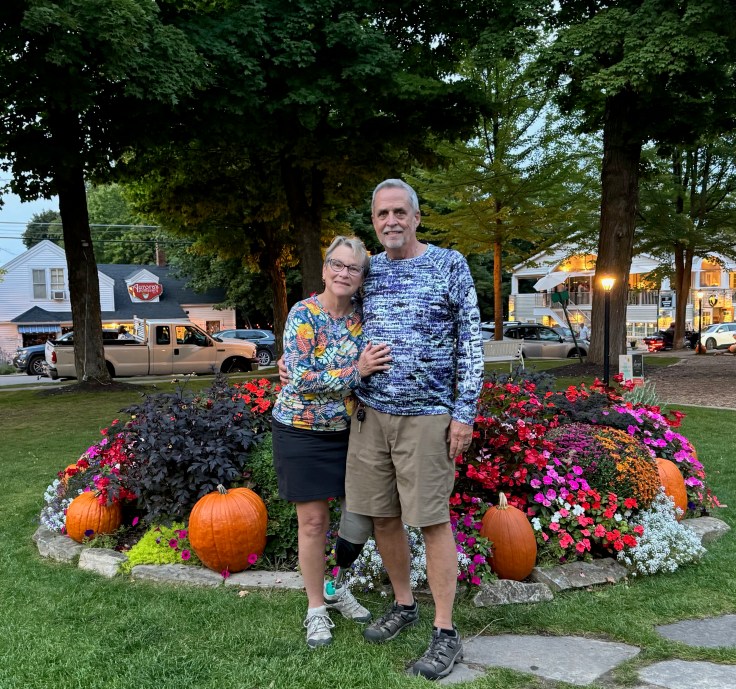
The ole folks at the fish boil 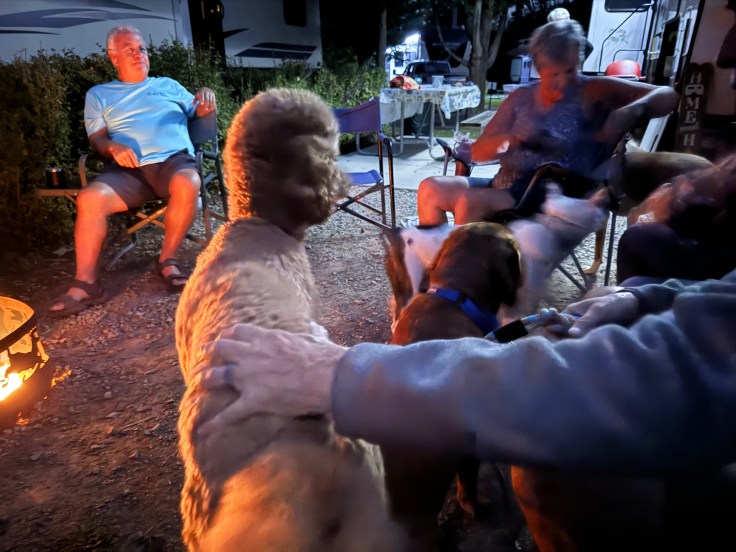
Sitting around the campfire 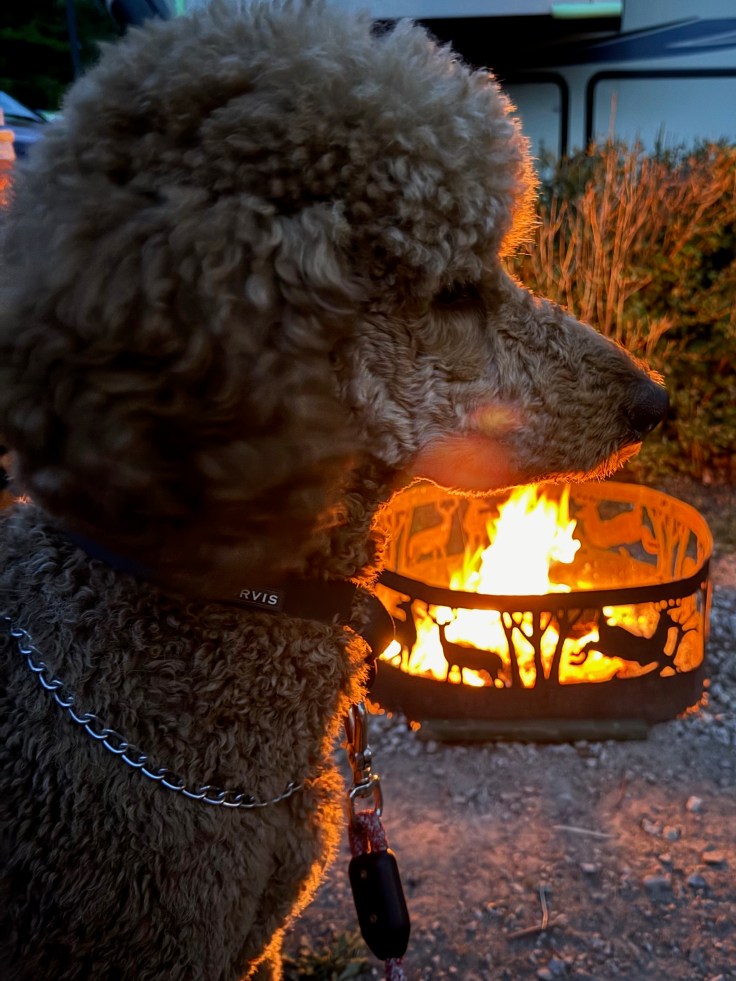
Firelight poodle
 RedDog on Wheels
Thanks for the travel story Pam. I live vicariously through my friends!
Bpb
Sent from Outlookhttp://aka.ms/weboutlook
LikeLike
I
LikeLike
I’ve added Door County to my travel bucket list. Obviously there’s more to the area than the apples I’ve read about. What campground did stay at? Thanks for sharing!
LikeLike
Harry, we stayed at the HTR Door County Campground in Egg Harbor. Really nice place!
LikeLike
Thank you for sharing! I do want to visit Door County! 😊
LikeLiked by 1 person